


Juntos Farm
A regenerative farm and food hub in the heart of Ibiza. Visit us to dine in our courtyard, explore our Farm Shop or join one of our unique experiences.
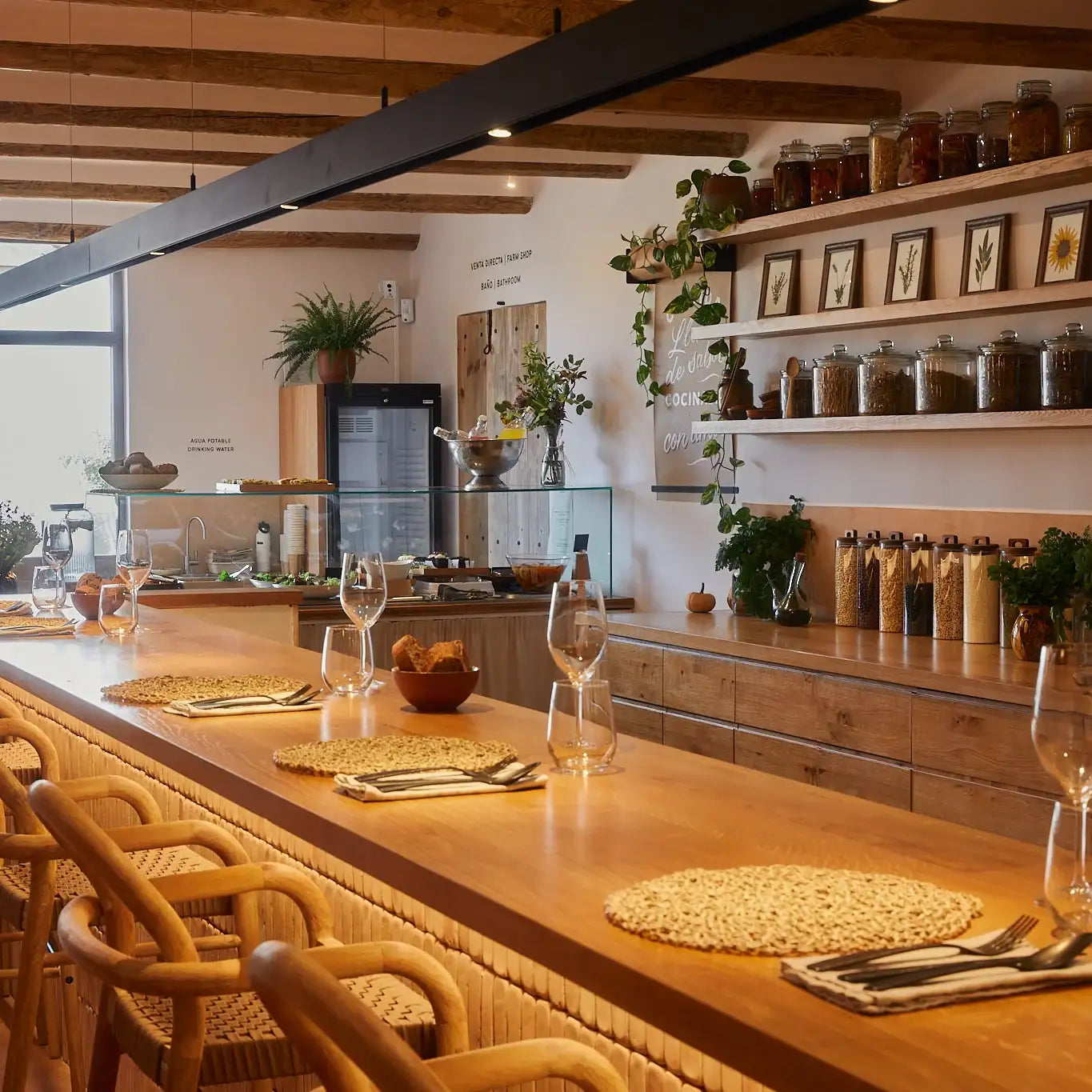
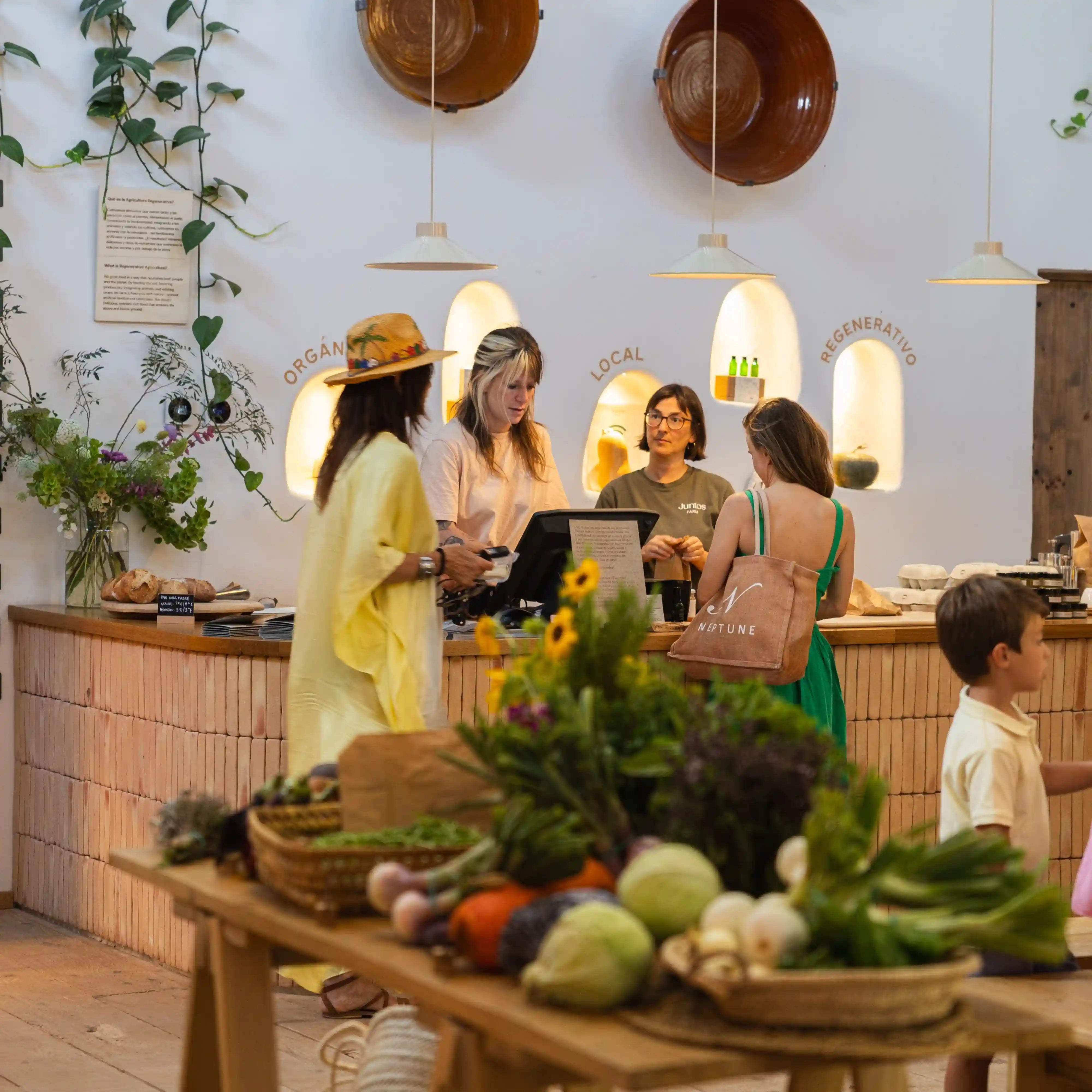
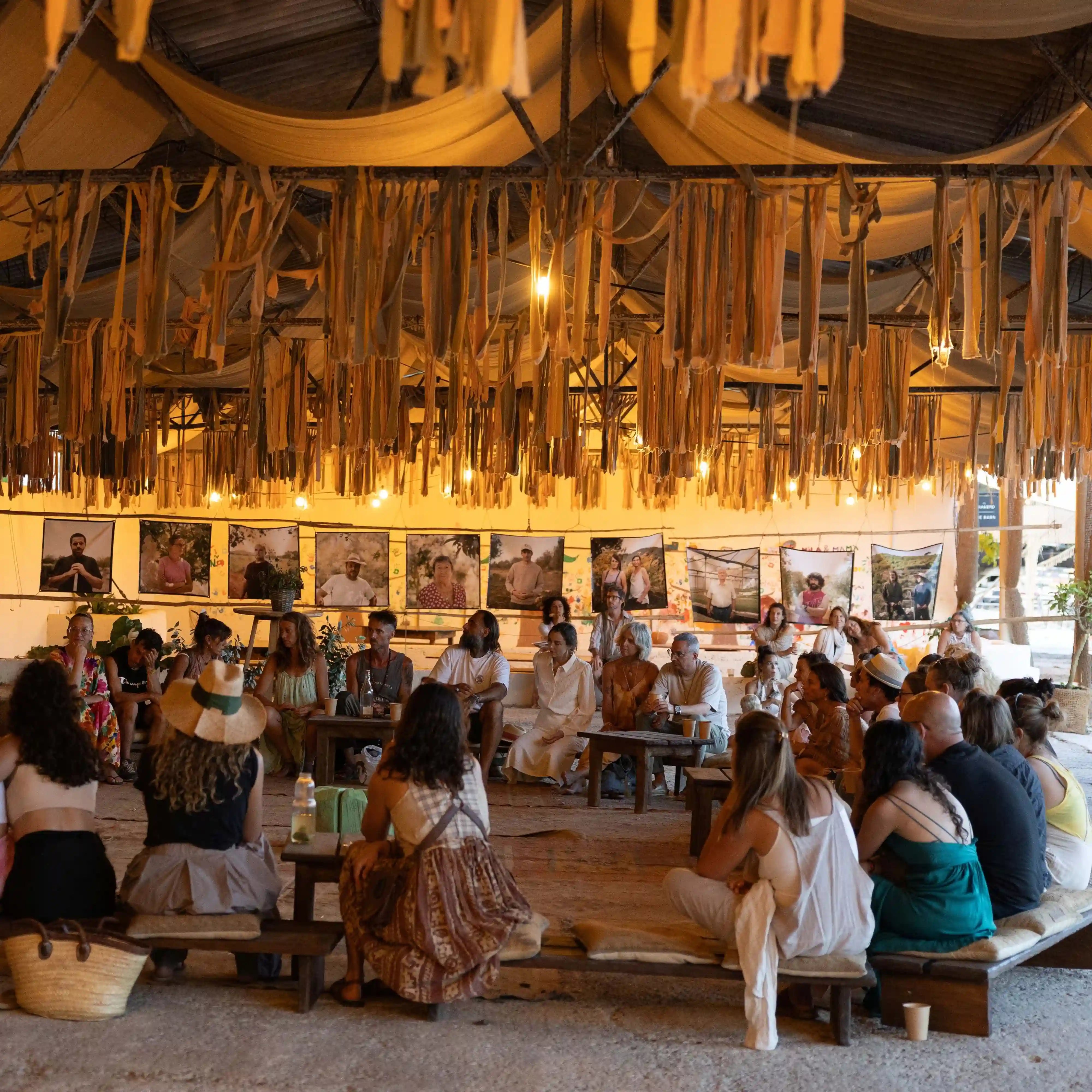
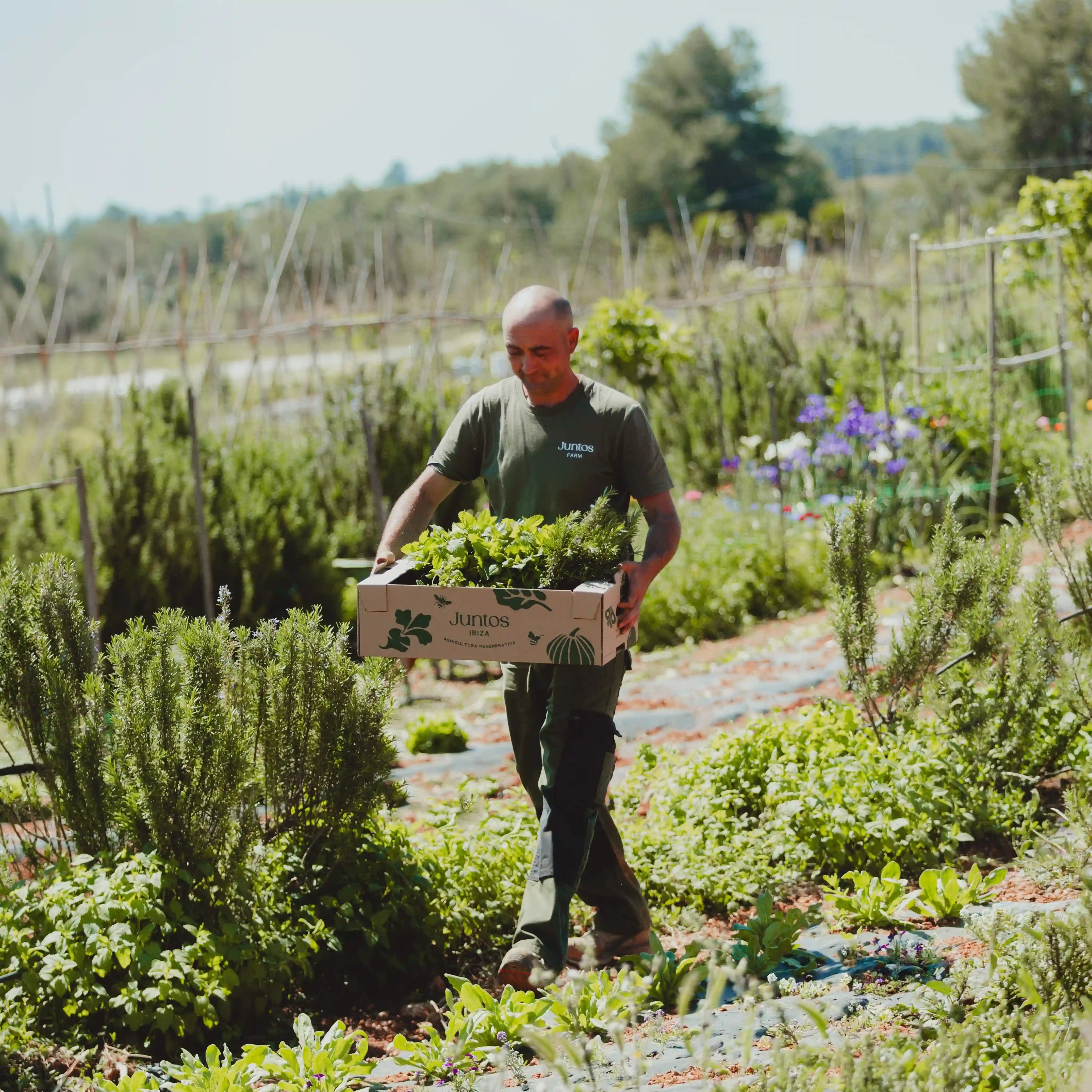
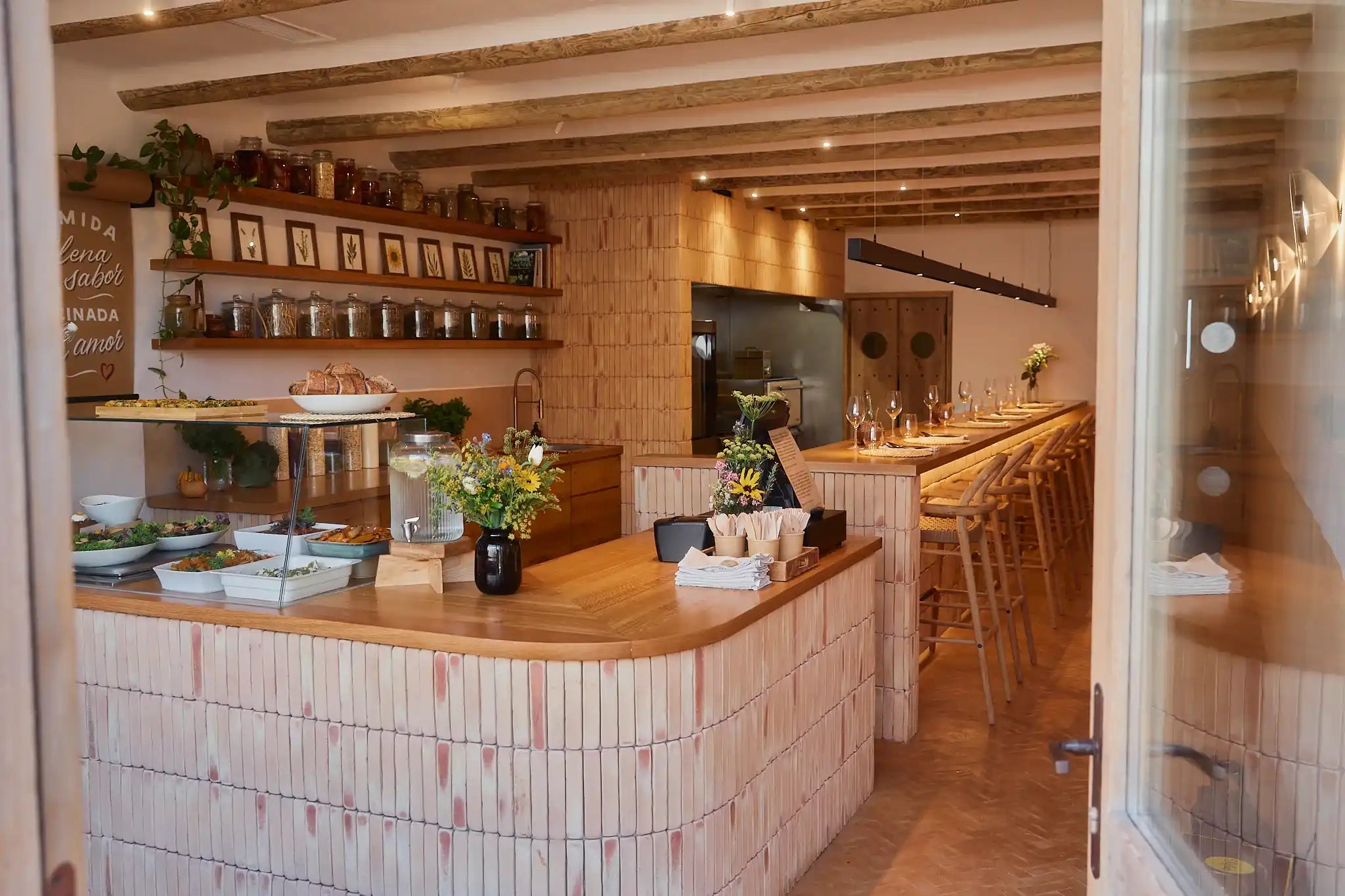
Enjoy a true farm-to-table experience, where seasonal menus are built entirely around our daily harvest and ingredients from local partner farms. Gather with friends under a shaded canopy to savour the flavours of the food we grow.
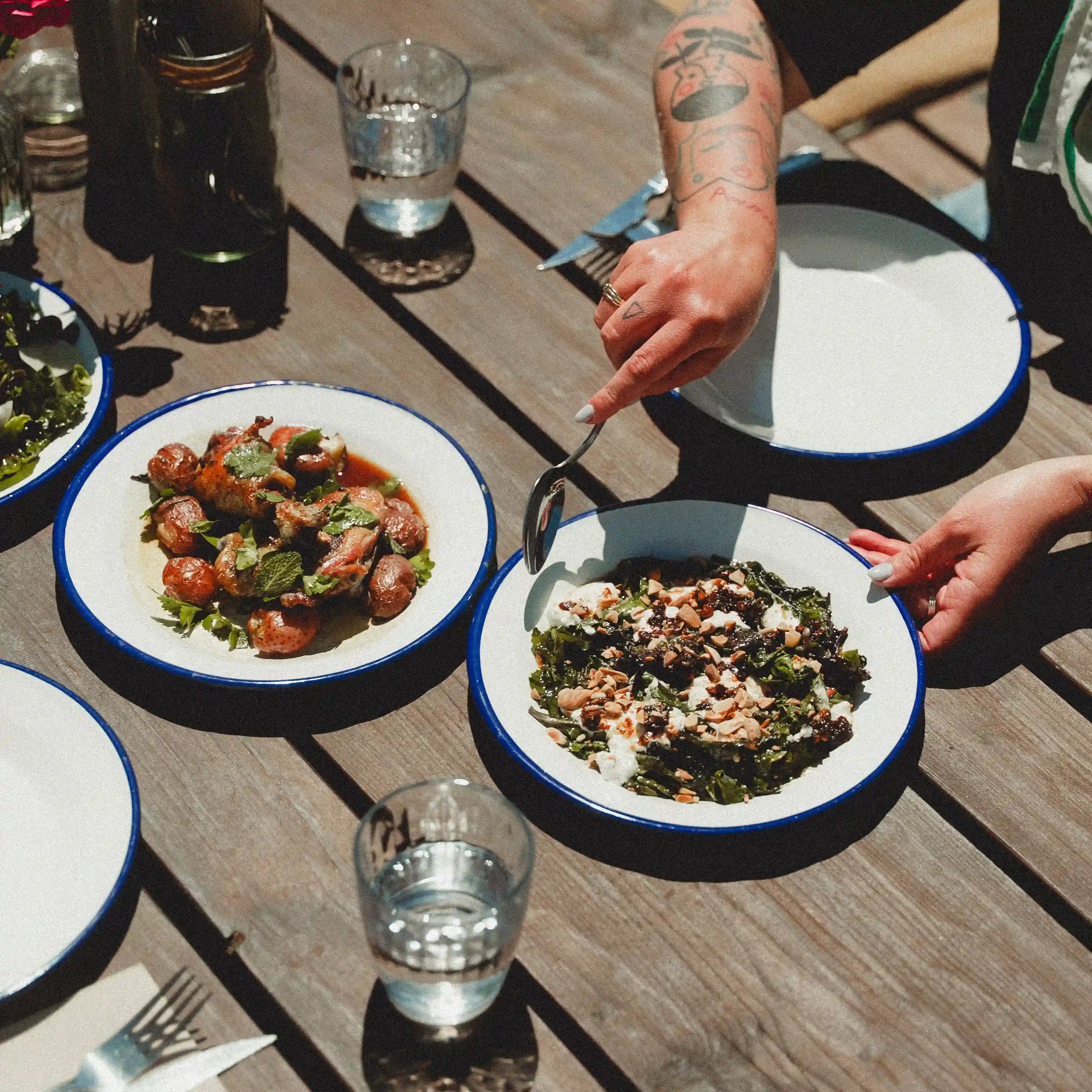
the best of the season
The food from our Tasting Room is a celebration of what's growing right now. We let the seasons dictate our offering, rotating our dishes to make sure you’re always tasting the freshest harvest from the farm.
Locally Sourced Ingredients
We believe in keeping things close to home. By sourcing exclusively from our own regenerative fields and a small circle of partner farms across the Balearics, we ensure everything on your plates comes from trustworthy farms.
Nutritious Food
Research shows that produce can lose up to half of its nutrients within just a few days of harvest. By serving food picked just meters away on the very same day, we can guarantee real flavour and nutrition. Grown organically and without pesticides, it’s farm-to-table in its purest, most honest form.
Family Friendly
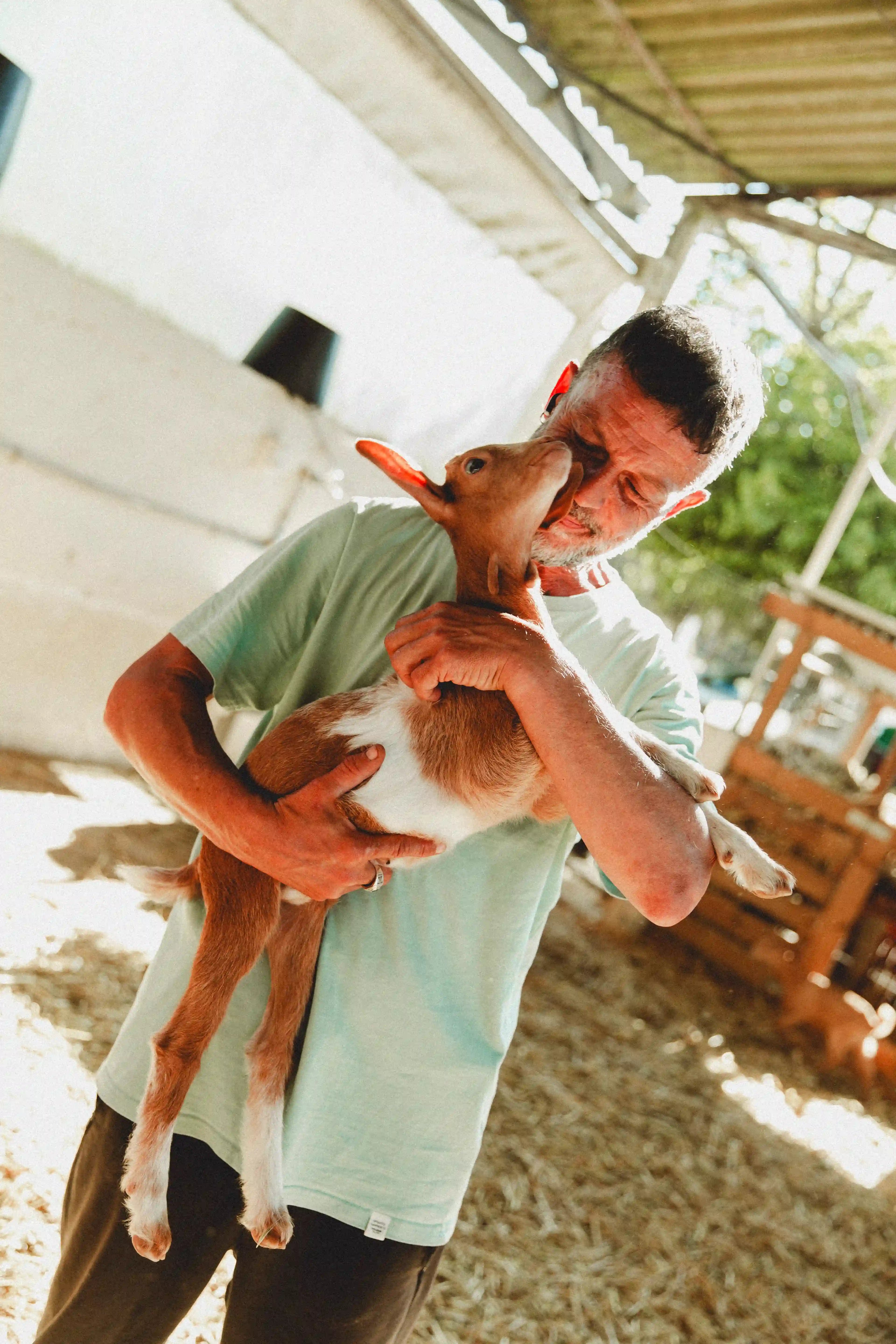
We love seeing families at the farm. To keep the little ones happy, we offer nourishing, kid-friendly portions and plenty of seasonal treats. Between meeting our friendly goats and exploring the climbing frames, there’s so much for them to discover. Don't forget to pick up a map at the Farm Shop so they can lead the way to all our favourite spots.
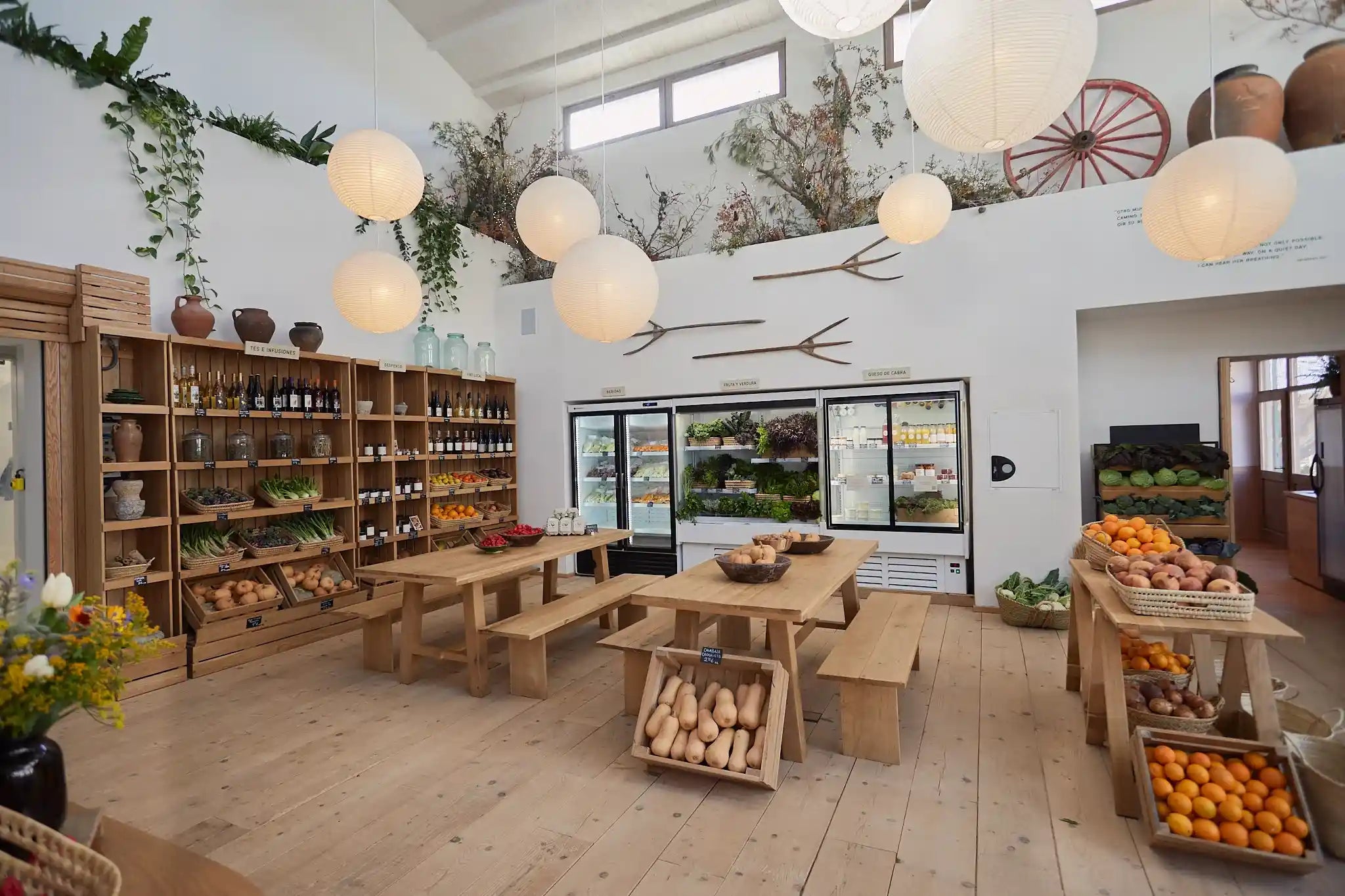
A selection of what we grow and what we make, alongside carefully chosen products from local producers and artisans across the Balearics. Fresh seasonal produce, preserves, ferments, oils, and pantry essentials; all grounding the values of the farm.

Certified Organic Produce
We’ve designed our Farm Shop to be a calm, light-filled space for you to discover our organic harvest. Because we only stock what’s in season, our selection of fruit and vegetables is constantly shifting. It’s a reflection of what’s growing on the farm right now, picked today and ready for you to take home.
Artisanal Farm Products
Our Farm Shop is filled with an abundance of homemade staples, all crafted right here on the farm. A favourite is our honey lemonade, sweetened with our own honey and made using sun-ripened lemons from the island. You’ll also find infusions of rosemary, lemon verbena, and saffron, alongside fresh babaganoush and goat’s milk and cheese.
Balearic Wines
We’ve curated a selection of delicious wines that celebrate the best of the Balearics. Latest additions include the fresh Blanc Moll and Negre from Supernova and Son Agulló’s traditional Mantonegro. We’re also proud to stock Blacknose, whose wines are made with biodynamic grapes from the hills of Ibiza.
Pantry Essentials
Grab a basket and explore our pantry, where we’ve gathered some of the best artisanal goods from across the islands. From T’estim’s natural Mallorcan teas to Can Gallart’s olive oils and sun-ripened chilli pestos, every jar tells a story. You'll also find Can Cavall Blau's orange vinegar and hand-poured candles from Sonmo, beautiful additions for your home or thoughtful gifts for loved ones.

The farm is a place to learn as much as it is a place to grow. We host workshops, farm visits, and seasonal experiences that keep agricultural knowledge alive and build culture around food.
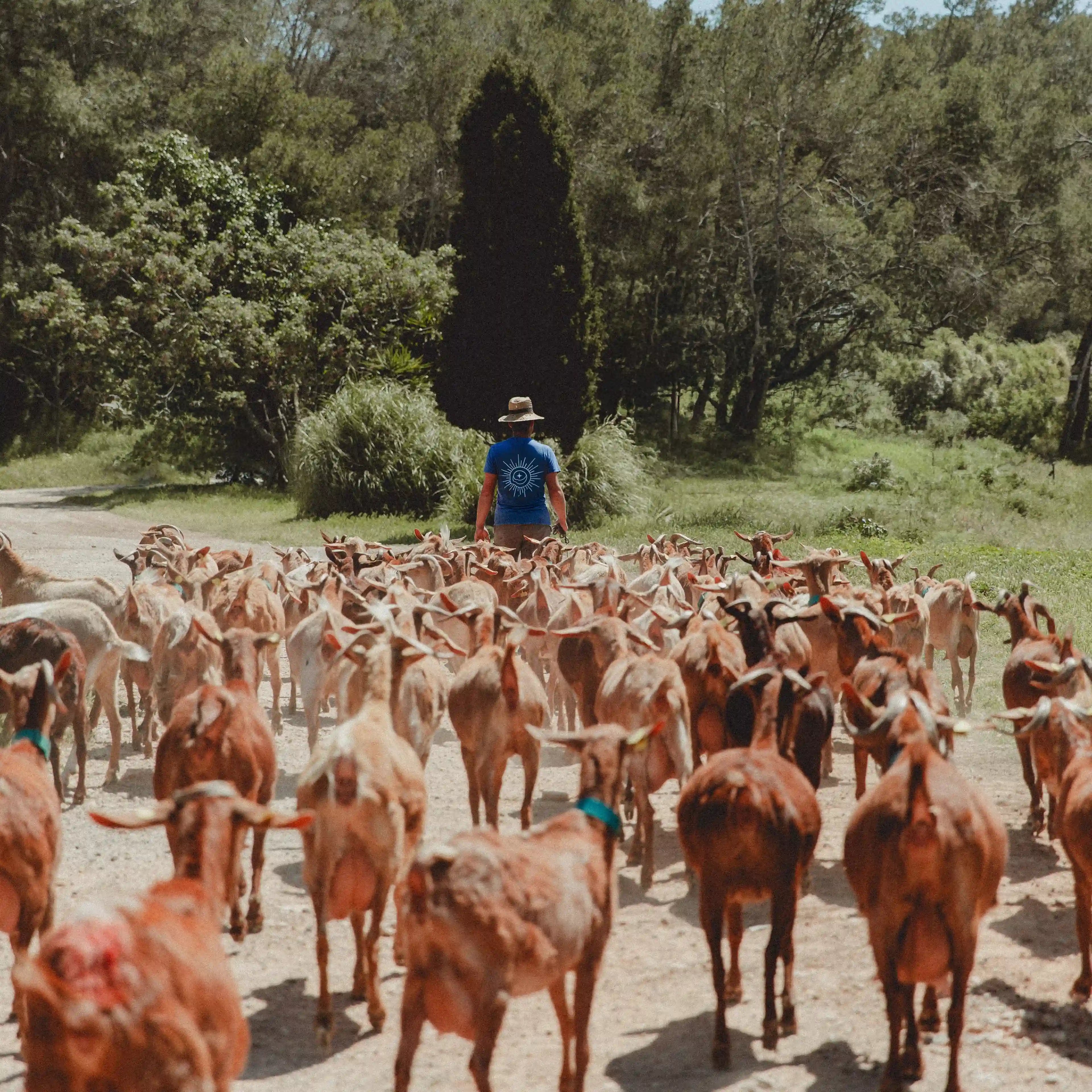
Farm Tour
Join us for a guided tour of our working farm. This is your chance to slow down, reconnect with nature, and see firsthand how we grow the ingredients that shape every plate we serve.
Field Days
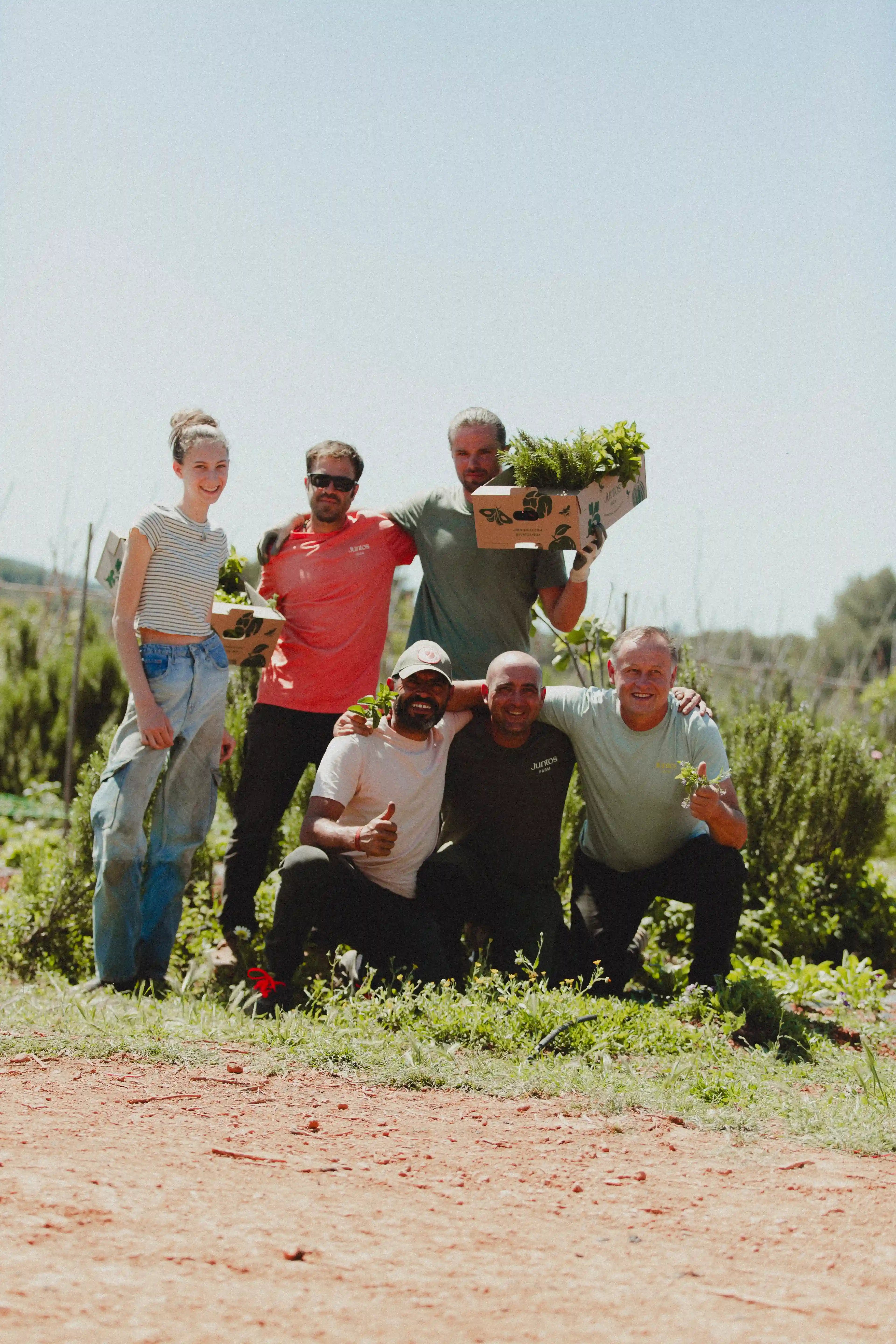
Join us bright and early for hands-on activities in the fields. Get your hands in the soil, help out our farmers, and enjoy learning about regenerative agriculture.
Family Harvest
Our newest experience invites you to get closer to where your food truly comes from. Step beyond the table and into the fields, where you’ll harvest seasonal vegetables with your own hands.
If you’re already a fan of our farm box, this is a unique opportunity to see exactly how each ingredient is grown and harvested, deepening your connection to the food you take home and enjoy.
Private Events
Looking to create a unique moment at the farm? All of our experiences are flexible and can be customised to suit your group whether you want to learn, celebrate, or simply gather around good food.
The Farm
The Farm
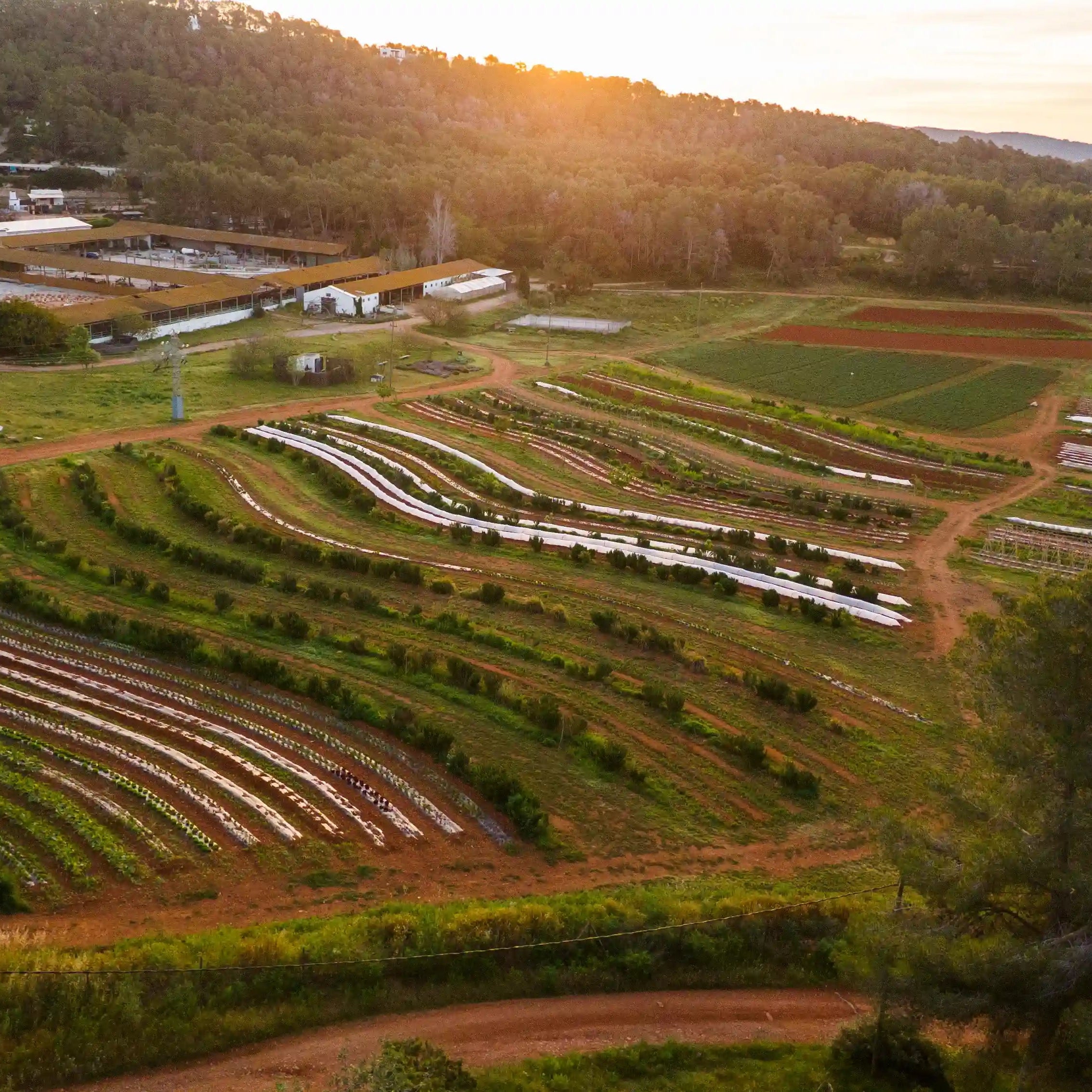
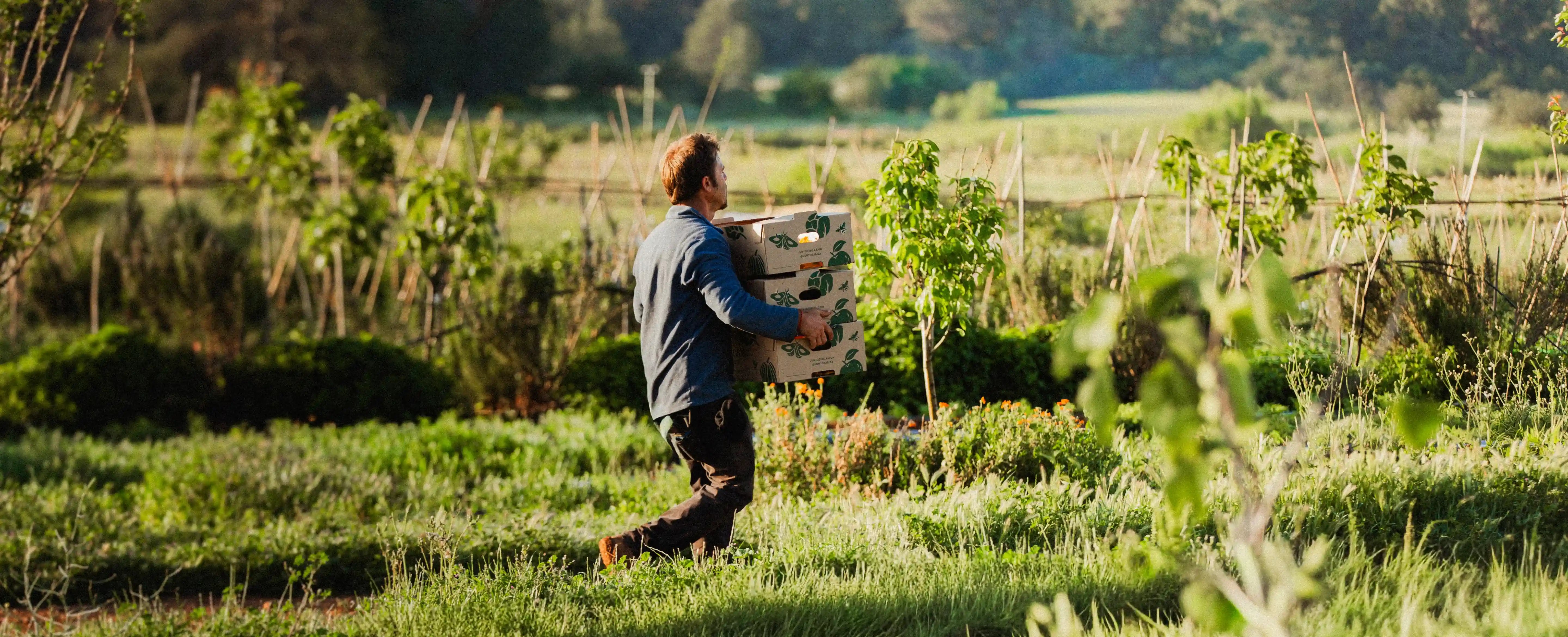
Juntos Farm sits on twenty hectares in the heart of Ibiza, on land that was once a working dairy and cattle facility and lay abandoned for over a decade before we arrived. It's where we grow food and where we test ideas: a living lab in the centre of the island.
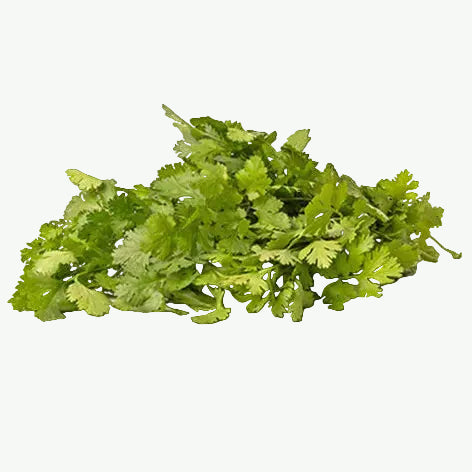
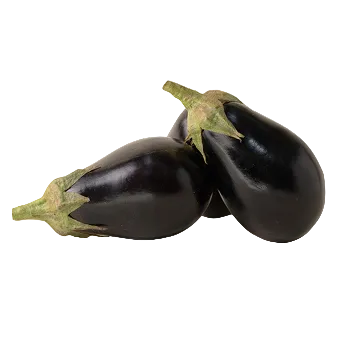
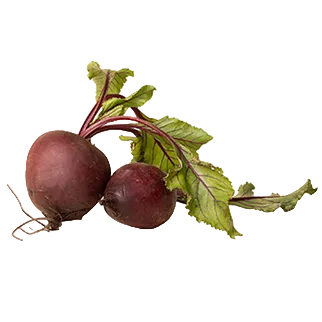
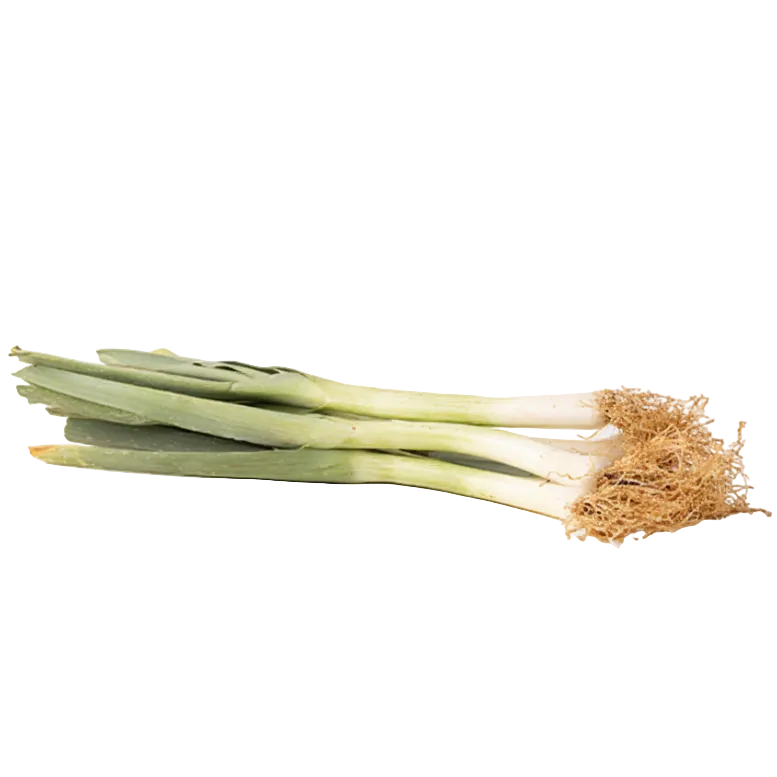
Our approach is regenerative. That means working with nature rather than against it, and growing in a way that improves soil health, biodiversity and ecosystem resilience over time. Our diversified vegetable garden follows the keylines of the land, with curving rows that trace the topography. The pattern slows rainfall, holds water in the soil and reduces what we draw from the well. Between the beds we grow vegetables, fruits, nuts and flowers, alongside the cover crops, herbs and trees that hold the system together. A small herd of goats grazes the margins, and our bees move between the orchards and the wildflowers.
Book a farm tour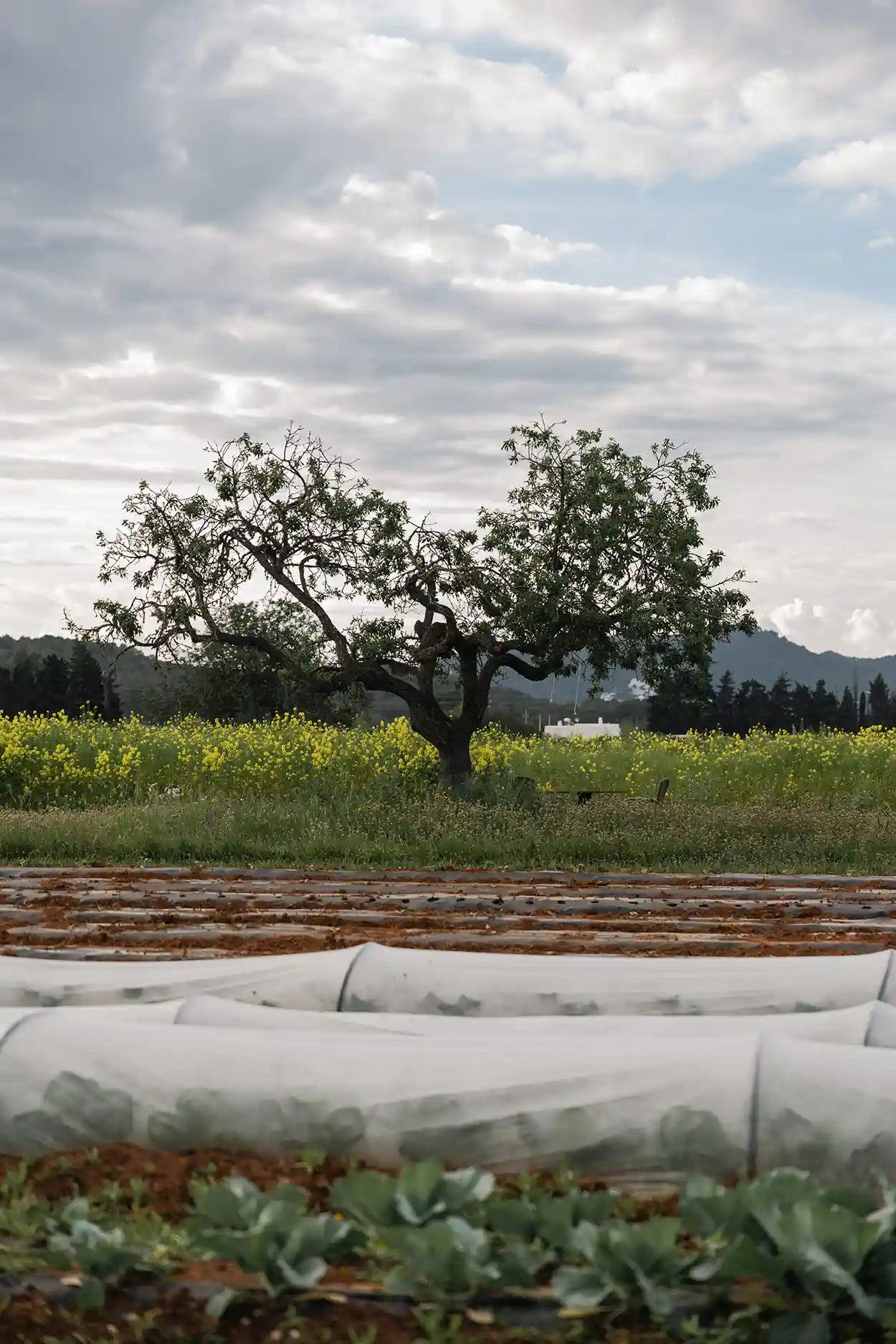



Before

After
Our Regenerative Practices
Cover Cropping

Cover crops are plants grown primarily to protect and enrich the soil rather than for harvest. They help prevent erosion, improve soil structure, suppress weeds, and provide habitat for beneficial organisms. Cover crops also enhance soil fertility by fixing nitrogen and increasing organic matter when they are incorporated into the soil.
Low-Till Farming

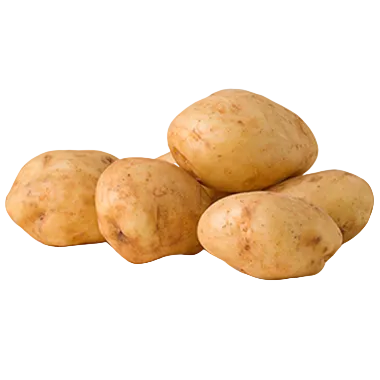
Tilling is a tool that is too often overused, disrupting soil structure and beneficial microbial communities when it isn't necessary. However, when applied with low intensity and knowledge of the land, it becomes a valuable asset, enabling us to manage our heavy clay soils and successfully cultivate crops like carrots and potatoes.
We use regenerative rules as a guide, adapting our methods to maintain a continuous harmony between production, practical management, and environmental protection.
Crop Rotation
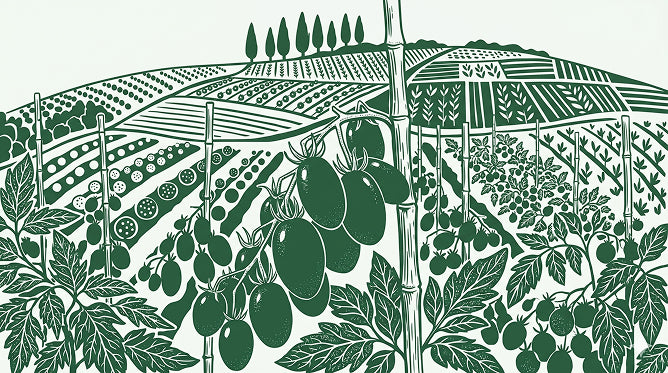
Crop rotation involves systematically changing the type of crops grown in a specific field over time. By rotating crops, farmers can break pest and disease cycles, reduce the build-up of pathogens, and improve soil health by diversifying nutrient demands and root structures.
Composting and Organic Matter Cycling

We don't use any pesticides, herbicides, or synthetic fertilizers. Composting involves the decomposition of organic materials like crop residues, manure, and other plant waste into nutrient-rich humus. Adding compost to the soil increases its organic matter content, which enhances water retention, nutrient availability, and microbial activity.
Agroforestry and Perennials

Agroforestry is the practice of integrating trees and shrubs with crops and/or livestock on the same piece of land. By incorporating perennial plants into the farm, it increases biodiversity, provides habitat for beneficial organisms, sequesters carbon, and helps reduce the environmental impact of agriculture.
Cover Cropping
Cover crops are plants grown primarily to protect and enrich the soil rather than for harvest. They help prevent erosion, improve soil structure, suppress weeds, and provide habitat for beneficial organisms. Cover crops also enhance soil fertility by fixing nitrogen and increasing organic matter when they are incorporated into the soil.
Low-Till Farming
Tilling is a tool that is too often overused, disrupting soil structure and beneficial microbial communities when it isn't necessary. However, when applied with low intensity and knowledge of the land, it becomes a valuable asset, enabling us to manage our heavy clay soils and successfully cultivate crops like carrots and potatoes.
We use regenerative rules as a guide, adapting our methods to maintain a continuous harmony between production, practical management, and environmental protection.
Crop Rotation
Crop rotation involves systematically changing the type of crops grown in a specific field over time. By rotating crops, farmers can break pest and disease cycles, reduce the build-up of pathogens, and improve soil health by diversifying nutrient demands and root structures.
Composting and Organic Matter Cycling
We don't use any pesticides, herbicides, or synthetic fertilizers. Composting involves the decomposition of organic materials like crop residues, manure, and other plant waste into nutrient-rich humus. Adding compost to the soil increases its organic matter content, which enhances water retention, nutrient availability, and microbial activity.
Agroforestry and Perennials
Agroforestry is the practice of integrating trees and shrubs with crops and/or livestock on the same piece of land. By incorporating perennial plants into the farm, it increases biodiversity, provides habitat for beneficial organisms, sequesters carbon, and helps reduce the environmental impact of agriculture.


Opening Hours
Tasting Room
| Monday | 18:30 - 22:30 |
| Tuesday |
18:30 - 22:30 |
| Wednesday |
18:30 - 22:30 |
| Thursday |
18:30 - 22:30 |
| Friday |
18:30 - 22:30 |
| Saturday |
18:30 - 22:30 |
| Sunday |
18:30 - 22:30 |
Farm Shop
| Monday | 09:30 - 16:30 |
| Tuesday |
09:30 - 16:30 |
| Wednesday |
09:30 - 16:30 |
| Thursday |
09:30 - 16:30 |
| Friday |
09:30 - 16:30 |
| Saturday |
09:30 - 16:30 |
| Sunday |
09:30 - 16:30 |
| Monday | 18:30 - 22:30 |
| Tuesday |
18:30 - 22:30 |
| Wednesday |
18:30 - 22:30 |
| Thursday |
18:30 - 22:30 |
| Friday |
18:30 - 22:30 |
| Saturday |
18:30 - 22:30 |
| Sunday |
18:30 - 22:30 |
| Monday | 09:30 - 16:30 |
| Tuesday |
09:30 - 16:30 |
| Wednesday |
09:30 - 16:30 |
| Thursday |
09:30 - 16:30 |
| Friday |
09:30 - 16:30 |
| Saturday |
09:30 - 16:30 |
| Sunday |
09:30 - 16:30 |
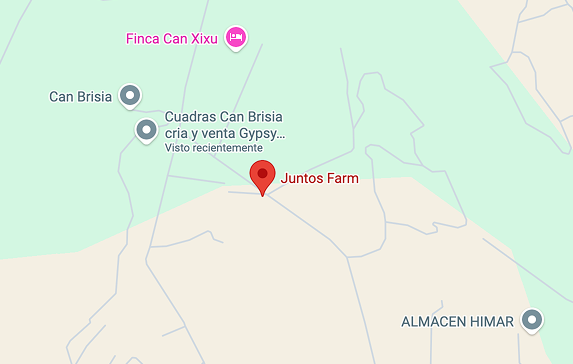
Diseminado P 28, 45, 07814 Santa Gertrudis de Fruitera, Illes Balears
Diseminado P 28, 45, 07814 Santa Gertrudis de Fruitera, Illes Balears